Can I Sue My Neighbor If His Dead Tree Falls On My House?
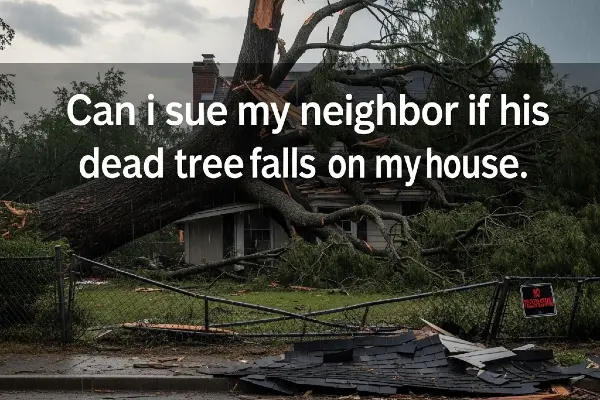
You asked a smart, practical question: when a neighbor’s dead tree falls on your house, can you sue? This article walks you through the legal grounds, the evidence you’ll need, how insurance fits in, practical steps to protect your property and claim, and realistic expectations so you can act confidently and efficiently.
Can I Sue My Neighbor If His Dead Tree Falls On My House
Yes—often you can, but success depends on fault and notice: if the neighbor knew or should have known the tree was dead or dangerous and failed to act, you have strong grounds for a negligence claim; if the fall was sudden and unforeseeable (an unavoidable storm or “act of God”), recovery may be unlikely unless local law imposes special liability.
When You Are Likely To Win
You have a strong case when you can show the neighbor had actual knowledge or constructive notice (they or other reasonable people should have noticed decay, leaning, cracks, pest infestation) and failed to remedy the hazard after being warned or after visible signs existed for a meaningful time, because courts focus on duty to prevent foreseeable harm from dangerous conditions on one’s property.
When You Probably Cannot Recover
If a violent, unpredictable natural event (extreme wind, lightning, tornado) caused a healthy tree to fall suddenly and there was no prior notice of risk, most courts treat it as an act of God and fault-based claims against your neighbor are unlikely to succeed; similarly, if the neighbor lacked any reason to know the tree was hazardous, negligence claims weaken.
What Legal Theories Apply
Common legal theories include negligence (failure to inspect or address a known danger), premises liability (duty to keep property reasonably safe), trespass or private nuisance (if the tree encroached or caused ongoing damage), and in limited jurisdictions strict liability for hazardous conditions; each theory requires different proof but negligence is the typical path in tree-fall cases.
Evidence You Must Gather Immediately
Collect decisive proof while it’s fresh: • Photos and video of the tree, damage, stump and surrounding conditions from multiple angles; • Date-stamped records showing when the tree fell; • Copies of any prior complaints, emails or texts you sent the neighbor; • Witness names and statements; • An arborist’s inspection report documenting disease/decay; • Emergency repair receipts and contractor estimates — this evidence builds a strong case for notice and causation.
Insurance And Subrogation Explained
Start with your homeowner’s insurance: your policy typically covers house damage and may pay for immediate repairs and living expenses, then your insurer can pursue the neighbor through subrogation; the neighbor’s homeowner policy might cover liability—working with insurers can yield faster recovery and spare you direct litigation in many cases.
Steps To Take Right After The Tree Falls
Act decisively and protect your claim: document everything with photos and notes, make emergency repairs to prevent further loss (keep receipts), notify your insurer promptly, notify the neighbor politely and in writing, obtain an independent arborist report, gather witness information, and avoid admitting fault or downplaying damage—these steps preserve evidence and strengthen either settlement or court claims.
How Much You Can Recover
Recoverable damages often include repair or rebuilding costs, reasonable temporary housing and living expenses, loss of personal property, diminution in property value, and sometimes incidental costs like tree removal and emergency repairs; punitive damages are rare and usually require egregious conduct by the neighbor.
Choosing Between Small Claims And Civil Court
Use small claims for limited disputes and faster resolution when damages are under your state’s cap (simple procedures, no lawyers required); for larger claims or complex liability issues hire a lawyer and file in civil court where you can pursue full damages, expert evidence, and pre-trial discovery.
Statute Of Limitations And Timing
Don’t delay: statutes of limitations vary (commonly 2–6 years) and sometimes run from the date of discovery; preserve evidence and file timely claims—if you wait too long you may forfeit your right to sue even if your case is strong.
Cost-Benefit And Practical Considerations
Be realistic about legal costs versus likely recovery: evaluate repair estimates, insurance coverage, deductible amounts, and the neighbor’s ability to pay; sometimes settlement through insurance or mediation is faster and cheaper than protracted litigation—pursue court only when recovery justifies expense and effort.
How An Attorney Can Help
A property or personal injury attorney will evaluate liability, collect and preserve evidence, obtain expert arborist and contractor reports, negotiate with insurers, pursue subrogation, and, if needed, litigate for full damages; consult early for an assessment—many lawyers offer free intake and contingency arrangements for suitable claims.
Final Advice And Next Steps
You handled your property wisely by seeking answers—immediately document damage, call your insurer, communicate in writing with your neighbor, order an arborist inspection, and consult counsel if damage is substantial or the neighbor denies responsibility; with clear evidence and prompt action you maximize your chance of full recovery and protect your home with confidence.